Asking to record without making it weird
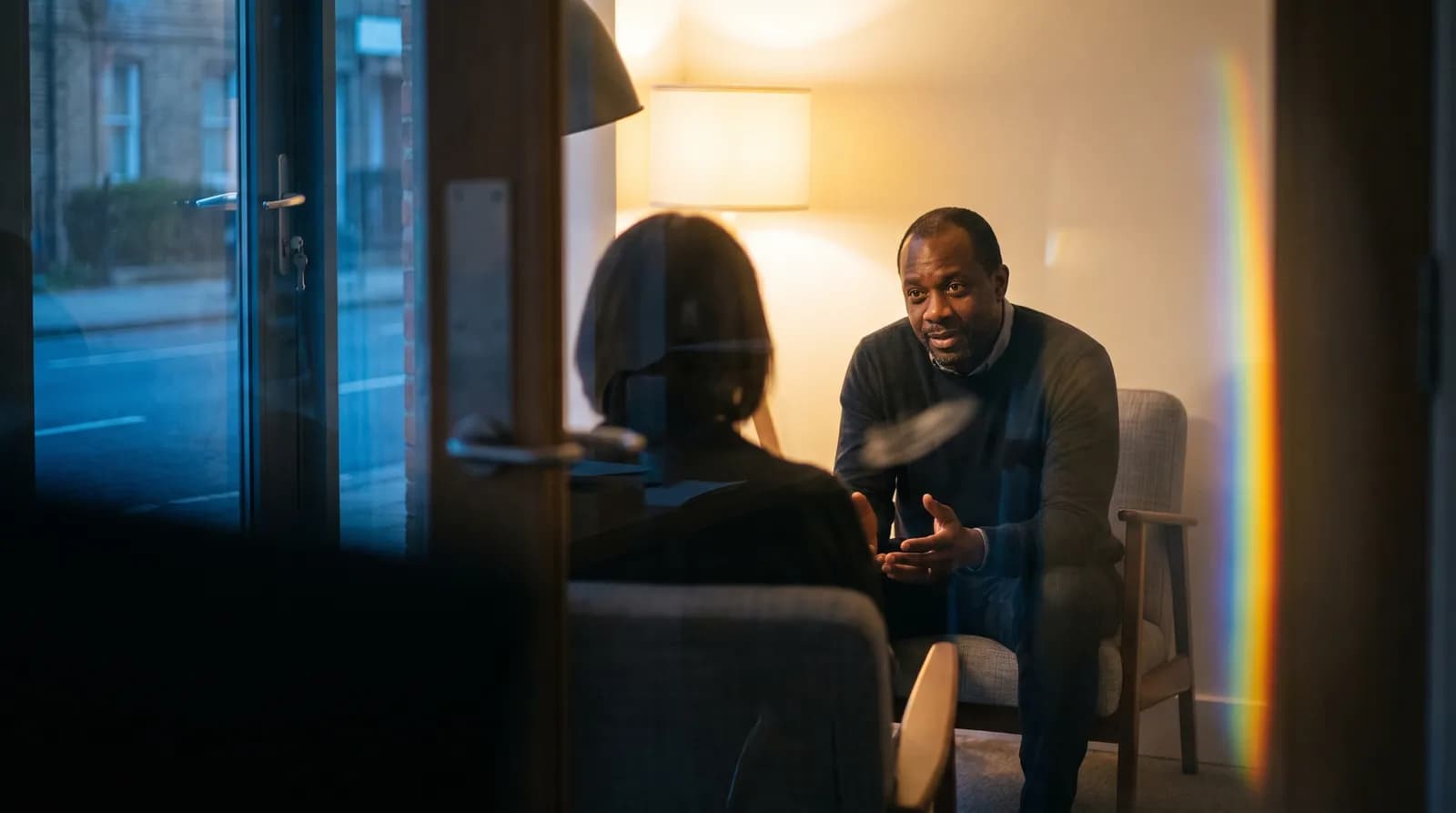
You have the sentence ready. You have said it four times this week. And this time it comes out as a small speech, with two justifications in it and an apology at the end, and the person opposite says "yeah, of course" in the voice people use when they mean the opposite. Nothing you did was wrong. It was just handled badly, and both of you felt it.
Whether you should record a conversation is a question about ethics, about the law, and about what you owe the other person. Whether the asking is bearable is a different question entirely. It is about delivery, and it is the one nobody writes about, which is why people who are completely clear on the principle still dread the five seconds where it happens.
What actually makes it weird
The first cause is timing. Most people wait for a natural opening, and a natural opening does not arrive, so they ask twenty minutes in, once the conversation has warmed up. By then you are asking somebody to agree retrospectively to twenty minutes they have already spent, which is a genuinely uncomfortable thing to be asked and a difficult thing to refuse.
The second is over-explaining. One reason is an ask. Three reasons is a case, and a case implies there is something here to be argued about. The more carefully you justify it, the more it sounds like a thing you are trying to get away with, and the person listening adjusts their reading of you accordingly.
The third is the pause. You ask, there is a second of silence while somebody thinks, and you fill it — with reassurance, with the encryption, with the fact that everybody does this now. That second was not awkward until you treated it as though it were. Almost all of the discomfort people attribute to recording is manufactured in the two seconds after the question, by the person who asked it.
The two fail independently. Plenty of people have the ethics exactly right and then deliver the ask so badly that what comes back is not really an answer. This playbook is for them.
The shape of a good ask
Five things, and four of them are about restraint. None of it takes longer than the sentence itself.
Five seconds, done properly
- Ask before the conversation startsWhile people are still sitting down, taking a coat off, finding the call. The ask belongs with the other arrangements — where to sit, how long you have got — because that is the part of a conversation where practical things are agreed and nobody is emotionally committed yet.
- Give one reason, about you"I will not remember the detail of this otherwise" is enough. A reason about your own limits is easy to believe. A reason about their benefit sounds like something you prepared, and a second reason, added because the first one did not land, is how a question turns into a pitch.
- Put the device where it can be seenPhone face up on the table, the pen out on the desk, the app on the screen they are looking at. A device somebody has forgotten about stopped being a device they consented to about twenty minutes ago, and the visible state is doing a job all the way through the conversation, not just at the start of it.
- Stop talkingAsk the question and then leave the silence exactly where it is. Two seconds is not a long time and it is not your job to rescue it. This single habit fixes more awkward asks than any improvement to the wording ever will.
- Take the first answerWhatever comes back is the answer. Not the one you get after mentioning that it is encrypted, or that only you will hear it, or that the last four people were fine with it. If you have to sell it, you have already been told no.
The third step is the one still working an hour later. Visible recording is the difference between an agreement somebody made once and one they are making continuously, and it is what lets a person change their mind halfway through without having to accuse you of anything.
It also helps to know what somebody is actually agreeing to, which is more than the question usually contains. Four things, whether or not you name them:
- That it is happening now, and roughly for how long.
- What it is for: the notes you write afterwards, the summary a colleague reads, the write-up you are producing.
- Where the recording ends up, and who besides you can reach it.
- That they can stop it at any point, without giving a reason, and that stopping it means the recording goes.
Most people ask about the first and worry privately about the third. Saying all four out loud takes about eight seconds, and it is the difference between a question and a formality. It also means that when somebody does ask what happens to it, you are answering rather than improvising.
| The situation | When to ask | The common mistake |
|---|---|---|
| A call you arranged | In the invitation, and again in the first minute | Asking once in writing and reading silence as a yes |
| Somebody who has come to see you | While they are sitting down | Waiting for a natural pause, which does not come |
| A conversation that started by accident | The moment you realise you want it kept | Starting it first and mentioning it afterwards |
| More than two people in the room | Before anyone has spoken, to everybody | Asking whoever convened it and calling that the room's answer |
Put the sentence where they already read it
The most reliable version of this ask arrives before the conversation does. A line in the calendar invitation, in the confirmation message a practice already sends out, in the intake form, at the foot of the email carrying the agenda: I usually record these so my notes are accurate, and it is no trouble at all if you would rather I did not.
That does two useful things. It gives somebody time to think about it away from you, which is the only condition under which a no is genuinely free. And it turns the question in the room into a confirmation, which is where nearly all of the awkwardness was living.
What it does not do is replace the asking. Written notice nobody replied to is not agreement; it is a smaller surprise. Say it again in the room, in one short sentence, and let the written version do what it is good at, which is removing the element of ambush.
One practical note on unplanned conversations, which are the hardest of these. Hover keeps recording a tap away from whatever is on your screen, and the Ona RecordPen is a Bluetooth pen you put on the table. The point is attention: the less of it the mechanics take, the more of it you have for the asking.
I stopped explaining it. Now it is one sentence while they are getting settled, the phone goes face up on the desk, and I wait. People say yes or they say no, and either way we are into the appointment ten seconds later.
Fen A., Acupuncturist, multi-practitioner clinic
Stopping, and what to say when you do
The other half of asking well is being obviously easy to stop. People agree to things more readily when reversing the decision is cheap, and they watch how you handle a stop far more closely than they watched how you handled the ask.
So stop it without ceremony. Say once that you have stopped, and then continue the conversation as though nothing has happened, because nothing has. Do not ask why, do not offer to start again later, and where the thing that prompted the stop is already in the conversation, delete the meeting. Deletion here is total — the transcript goes, and so does every summary Meeting Notes built out of it — which is what lets you say it is gone and mean it.
Where a yes runs out
A yes is given to a purpose, not to a device. Somebody who agreed to a recording so that your notes would be accurate has not agreed to that conversation being shown to a colleague, quoted in a write-up, or produced six months later to settle a disagreement. When the purpose changes, the asking starts again, and the fact that you already have the transcript is not an argument for anything.
Conversations are also full of people who are not in them. A client talks about their employer, their partner, the colleague they cannot work with. None of them were asked and all of them are now in a recording. You cannot obtain their agreement, and it would be dishonest to pretend the problem is absent. What you can do is delete the transcript once what you needed is written; Ona deletes the audio itself as soon as it is transcribed.
It is worth being exact about what a product can do here. Ona has no way of knowing whether the person opposite agreed: there is no consent field and no record of the asking. What it does is narrower. A recording starts because you started it, it shows that it is running for as long as it runs, nothing joins a call on your behalf, and deleting one removes everything derived from it. The asking stays yours. For where the rest of a practice's week fits around that, there is Ona for health and wellness professionals.
And a well-delivered ask does not make every conversation recordable. Some should not be recorded even where the person would agree, because refusing you would cost them something, or because what is about to be said is not a thing anybody should be able to play back. Whether to ask comes before how, and good phrasing cannot improve a decision that was wrong to begin with.
The awkward ones
Then you have a no with a polite face on it, and you already know that, which is why you noticed. Do not record.
Say that you will write it up afterwards instead and move straight on, because the quickest way to make it worse is to hold an inquest into it.
No, and — subject as ever to whatever the rules where you are have to say about it — a yes holds for conversations of the same kind, for the same purpose, with the same people.
Three things restart the question: the purpose changes, somebody new is in the room, or enough time has passed that they would be surprised. If they would be surprised to learn it was running, you needed to ask again.
Put it to everybody present rather than to whoever called the meeting, because an organiser cannot agree on behalf of the people who turned up.
And if you are a guest in someone else's meeting, whether it can be recorded at all is their decision. Ask them before the meeting rather than raising it in front of everybody, which puts them on the spot in exactly the way this post is trying to avoid.
Practise the sentence once
Write the one you would actually say, put the device where it can be seen, and let the answer be whatever it is. Then record the conversations you were told yes to.